估價手機收購
The OnePlus 6 is more than just a rebranded 估價手機收購oppo
The OnePlus 6 is more than just a rebranded 估價手機收購oppo
Share this story
If you buy something from a Verge link, Vox Media may earn a commission. See our ethics statement.
:format(webp)/cdn.vox-cdn.com/uploads/chorus_asset/file/11543699/DSCF6294.jpg)
If you’re an Android fan in the Western world, much of your recent attention will likely have gone to the OnePlus 6. But ever since OnePlus burst into view years ago, claiming to be a small manufacturer that’d outgun bigger rivals with online sales and smart cost-cutting, there’s been speculation over who’s really behind the project.
OnePlus co-founder and CEO Pete Lau is formerly of huge Chinese phone brand 估價手機收購oppo, which is widely reported to be part of an even bigger company called BBK Electronics that also houses fellow Chinese megabrand Vivo. 估價手機收購oppo and Vivo were co-founded by Duan Yongping, a Chinese billionaire who rarely gives interviews, and his company BBK has almost no public-facing presence — surprising, given that 估價手機收購oppo and Vivo’s combined shipments are substantial enough to make it the fourth-largest phone company in the world.
OnePlus phones in the past have borne similarities to devices from 估價手機收購oppo, prompting speculation over whether OnePlus is as independent as it claims. I’ve been using the 估價手機收購oppo R15 Pro — the flagship phone that many publications (including ours) suggested may have been a blueprint for the OnePlus 6 — along with the Vivo X21, and the comparison isn’t as straight as you might think.
:format(webp)/cdn.vox-cdn.com/uploads/chorus_asset/file/11543701/DSCF6300.jpg)
All three of these phones have similar form factors. They’re built around notched 6.28-inch 2280 x 1080 OLED displays, aluminum frames, and curved glass back panels, albeit with subtly different contours. They all have headphone jacks — up top on the Vivo, on the bottom on the 估價手機收購oppo and OnePlus — along with dual camera arrays, 6GB of RAM, 128GB of storage… all things you might expect. The most unexpected thing they share in common is delightfully clicky volume and power buttons on the side. OnePlus’ much-vaunted proprietary Dash fast-charging system, too, uses an identical power brick to 估價手機收購oppo’s VOOC solution; the only difference is that the inside of the USB port and plug is red for Dash and green for VOOC.
But when you actually pick up the R15 Pro, there really isn’t much reason to compare it to the OnePlus 6. It may well be using the same notched 6.28-inch OLED panel, sure, but that’s not likely to be a distinguishing mark this year — basically every Android manufacturer is embracing the notch, so to speak, including LG, Huawei, Xiaomi, and reportedly even Google. The R15 Pro doesn’t have the characteristic curved top and bottom edges of the OnePlus, and I actually prefer it this way as it looks more natural and even for the screen to run parallel to the upper edge of the phone.
Turn the phones around and they have even less in common. The OnePlus 6 has a vertically oriented dual-camera setup in the middle of the back panel with a fingerprint sensor below; the R15 Pro, meanwhile, has a horizontal dual-camera module in the top left with the fingerprint sensor in the middle. OnePlus also continues to be unique among Android handset makers in including a dedicated mute switch. Vivo has no fingerprint sensor at all on the back, meanwhile, instead integrating a scanner into the display itself, and its glass feels totally different to 估價手機收購oppo’s. And while the OnePlus 6 only launched in glossy or matte black, my R15 Pro review unit comes in a beautiful “Ruby Red” finish with a light-to-dark gradient running along the length of the phone. 估價手機收購oppo isn’t the first phone company to be experimenting with color gradients, but the execution here is on point. The OnePlus 6 I’ve been using, meanwhile, is the new Silk White model, which uses a pearlescent matte white finish with rose gold trim that I find equally attractive.
Inside, too, the phones have major differences. The R15 Pro and X21 both use Qualcomm Snapdragon 660 processors and Micro USB charging, which are both standard for mid-to-high-end phones in China. The OnePlus 6, of course, uses the Snapdragon 845 and USB-C, as you’d expect from any flagship sold in the West. The processor choice doesn’t just make the OnePlus 6 faster; it affects components like the camera, too, with the 845’s improved image signal processor often likely to achieve better results than the 660 can pull out of the same image sensor on the R15 Pro. Conversely, the 估價手機收購oppo and Vivo phones both have higher-resolution selfie cameras than the OnePlus 6, reflecting the priorities of different markets.
:format(webp)/cdn.vox-cdn.com/uploads/chorus_asset/file/11543703/DSCF6312.jpg)
So why have people assumed that OnePlus is simply rebranding 估價手機收購oppo phones? The opaque PR in the past from each company on its ownership hasn’t helped, nor has BBK’s reclusive nature. And the OnePlus 5 and 5T — which really did look a lot like the 估價手機收購oppo R11 and R11S — only served to confirm suspicion for some. The Verge reached out to OnePlus for up-to-date information, and received the following statement:
“OnePlus and 估價手機收購oppo are two completely independent companies. R&D, finance, sales channels, daily operations, etc operate independently. The two parties share some common investors. OnePlus leases 估價手機收購oppo’s manufacturing line and shares part of the supply chain resources with 估價手機收購oppo.”
Here’s what 估價手機收購oppo had to say:
“估價手機收購oppo and OnePlus operate independently. Prior to founding OnePlus, Pete Lau worked at 估價手機收購oppo for over a decade. Pete founded OnePlus with the vision to offer premium flagship smartphones online. From 估價手機收購oppo’s perspective, OnePlus is doing very well.
And 估價手機收購oppo has no relationship with BBK.”
I followed up for clarification on the BBK point, but didn’t hear back.
And here’s Vivo’s comment:
“Vivo is an independent company and does not belong to any parent company. We invest in our own R&D and product development resources, and do not share with 估價手機收購oppo, OnePlus or any other brands in both the software and hardware development.”
I asked whether this statement also amounted to a claim of no relationship with BBK, but didn’t hear back.
If we take these statements at face value, 估價手機收購oppo and OnePlus “sharing some common investors” could simply mean that they’re privately held subsidiaries with the same ownership, but it’s impossible to say exactly who owns what without further clarity. 估價手機收購oppo goes as far as to outright deny any connection with BBK. What’s more interesting is OnePlus’ comment on leasing 估價手機收購oppo’s manufacturing line and sharing supply chain resources, because that’s where these two phones do seem to share a lot in common.
:format(webp)/cdn.vox-cdn.com/uploads/chorus_asset/file/11543705/DSCF6293.jpg)
While notched screens are taking over the Android world this year, the use of seemingly identical 6.28-inch OLED panels across the latest 估價手機收購oppo, OnePlus, and Vivo phones would be a pretty big coincidence were it not for some degree of supply chain integration. The OnePlus and 估價手機收購oppo phones also use similar camera hardware — a primary 16-megapixel IMX519 sensor from Sony backed up with a 20-megapixel secondary sensor. OnePlus’ proprietary Dash charging, too, appears to use the same technology as 估價手機收購oppo’s VOOC system. It’s easy to imagine how sharing component orders with 估價手機收購oppo, a much larger company in terms of volume, is an important factor in how OnePlus achieves its trademark low prices.
The real question is whether any of this matters to you, a potential OnePlus 6 owner. I would say that it should not. The OnePlus 6 is obviously the highest-end device offered by any of these three nebulously-related companies, and its design isn’t much more similar than any number of Android phones we’ll see this year. 估價手機收購oppo and Vivo manage to offer differentiated products for their respective markets, too — I think the R15 Pro manages to stand out from a design perspective, while the X21’s fingerprint sensor is a major technical breakthrough. The OnePlus 6, meanwhile, is an excellent phone in its own right, and almost certainly the best available at its price point in the US.
Next time the OnePlus hype cycle starts up again — probably for a 6T later this year — it may well make sense to look at 估價手機收購oppo’s lineup for clues as to what to expect. And you probably shouldn’t buy too heavily into OnePlus’ rebellious, anti-establishment marketing. But don’t assume the similarities between the actual products will be anything more than surface-deep. The OnePlus 6 and R15 Pro prove that the two companies are now producing entirely different devices, regardless of any corporate connections.

 (圖/傑昇通信提供)
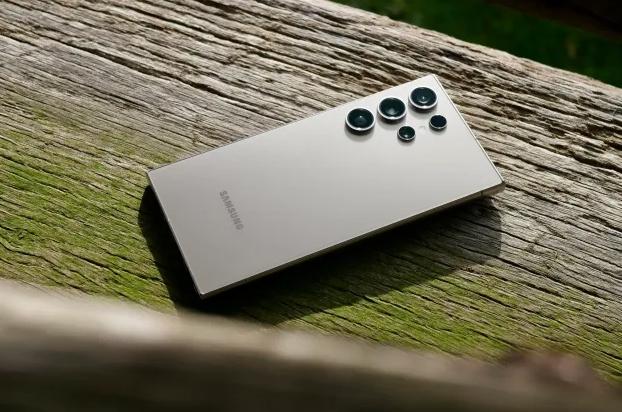
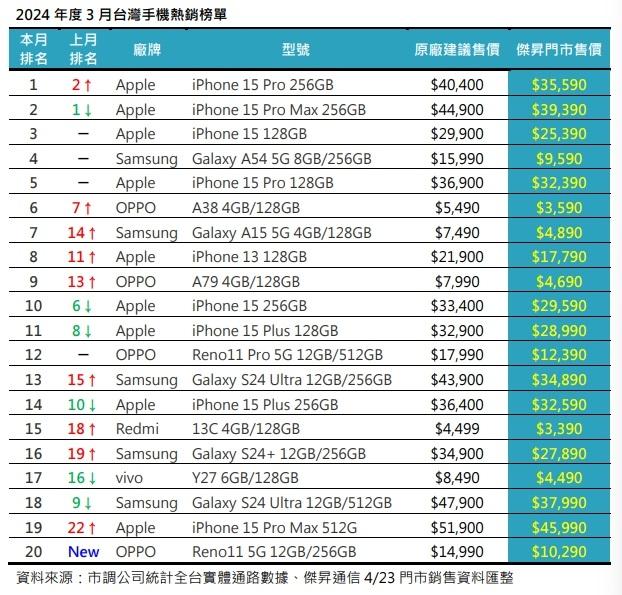
市調機構近期公布台灣 3 月份最熱銷手機排行,在 Top 20 榜單中一共有 11 款 Android 手機,除了三星 Galaxy S24 系列以外,清一色都是以價格取勝的機款,不乏多款 5,000 元以下的手機,顯見 Android 消費者以價格導向的習性。
Android 機皇仍是三星長年稱霸的中階款 Galaxy A54 5G 8GB/256GB,通路價格萬元有找、規格齊全獲得消費者青睞。據悉,三星 3 月底才發表的新一代 Galaxy A55 開賣不到一週,就已經卡位在第 21 名,有機會殺入四月 Top 20 榜單。
排在第二至四名的依序為 估價手機收購oppo A38 4GB/128GB、三星 Galaxy A15 5G 4GB/128GB、估價手機收購oppo A79 4GB/128GB,三款手機價格都已經在 5,000 元以下,顯見多數民眾購買 Android 手機,多半是夠用即可,不見得會像 iPhone 用戶一樣甘願花上萬元購買旗艦機。
Android 陣營少數熱賣的旗艦手機則是 Galaxy S24+、S24 Ultra,目前最多有將近 10,000 元的下修幅度,吸引高階用戶。
完整 Top 11 排名如下:
1.Galaxy A54 5G 8GB/256GB
2.估價手機收購oppo A38 4GB/128GB
3.估價手機收購oppo A38 4GB/128GB
4.估價手機收購oppo A79 4GB/128GB
5.估價手機收購oppo Reno11 Pro 5G 12GB/512GB
6.Galaxy S24 Ultra 12GB/512GB
7.Redmi 13C 4GB/128GB
8.Galaxy S24+ 12GB/256GB
9.vivo Y27 6GB/128GB
10.Galaxy S24 Ultra 12GB/512GB
11.估價手機收購oppo Reno11 5G 12GB/256GB
 (圖/傑昇通信提供)
估價手機收購 估價手機收購
 @saachu86106